Clamp vs Weighted Base Desk Lamps: Which Setup Fits Your Workspace?
A practical companion note for setting up an architect-style desk lamp in a real workspace.
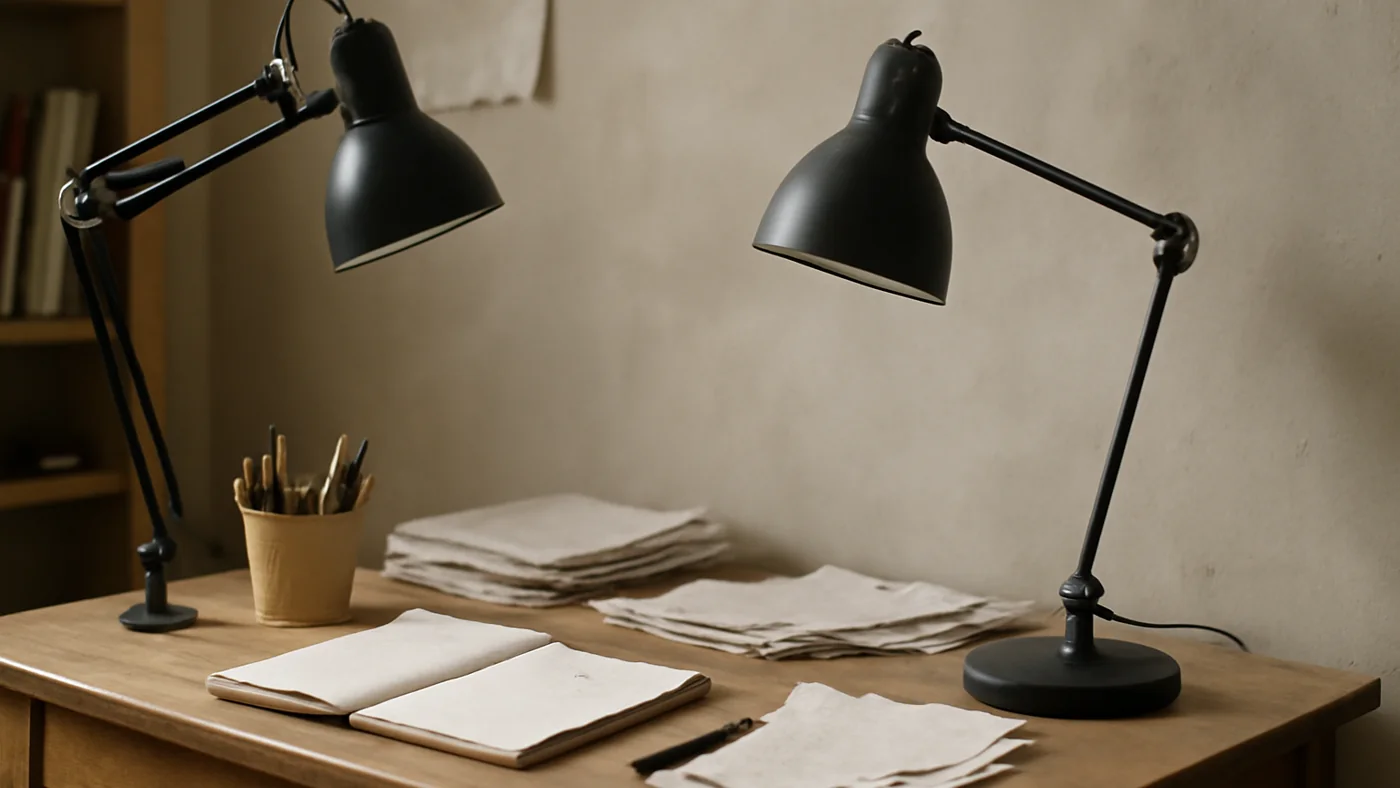
Before I worry about the nicest-looking lamp, I picture the desk during a normal work session: a notebook half open, a laptop pushed back, a mug too close to the edge, and a task that needs more light than the ceiling fixture gives. That lived-in view is the best way to make a lamp decision.
Start with the problem on the desk
A good clamp vs weighted base desk lamps: which setup fits your workspace? decision starts with the actual surface in front of you: papers, keyboard, sketchbook, monitor height, and the awkward places where shadows fall. I like to imagine the busiest half hour of the day rather than the prettiest product photo, because that is when a desk lamp either helps or becomes one more object to fight.
For an architect-style desk lamp, the small setup choices matter because the lamp is usually adjusted many times during a normal week. Think through the angle, reach, shade depth, cord path, switch location, and how the light behaves when the desk is messy rather than perfectly staged. Those details make the difference between a lamp that photographs well and one that quietly supports real work.
Look for adjustment that stays put
The useful part of an architect lamp is not just that it moves. It should stop moving when you let go. Loose hinges, weak springs, and flimsy knobs create constant micro-adjustments, especially during writing, drafting, planning, or reading small print.
For an architect-style desk lamp, the small setup choices matter because the lamp is usually adjusted many times during a normal week. Think through the angle, reach, shade depth, cord path, switch location, and how the light behaves when the desk is messy rather than perfectly staged. Those details make the difference between a lamp that photographs well and one that quietly supports real work.
Match the beam to the task
A wide, soft beam helps with notebooks and desk organization. A narrower, more deliberate beam suits detail work. The best setup often gives you enough light to reduce squinting without washing the whole room in glare.
For an architect-style desk lamp, the small setup choices matter because the lamp is usually adjusted many times during a normal week. Think through the angle, reach, shade depth, cord path, switch location, and how the light behaves when the desk is messy rather than perfectly staged. Those details make the difference between a lamp that photographs well and one that quietly supports real work.
Respect the desk edge
Clamp lamps save room, but the desk lip needs enough depth and strength. Weighted bases are friendlier for renters, glass desks, or changing workstations, but they take real space. Neither option is automatically better; the winner is the one you will not resent after a week.
For an architect-style desk lamp, the small setup choices matter because the lamp is usually adjusted many times during a normal week. Think through the angle, reach, shade depth, cord path, switch location, and how the light behaves when the desk is messy rather than perfectly staged. Those details make the difference between a lamp that photographs well and one that quietly supports real work.
Keep comfort boring and reliable
Eye comfort usually comes from boring details: stable brightness, no obvious flicker, a shade that blocks direct glare, and a lamp head that can sit slightly off to the side. That is less glamorous than a feature list, but it is what makes late work feel easier.
For an architect-style desk lamp, the small setup choices matter because the lamp is usually adjusted many times during a normal week. Think through the angle, reach, shade depth, cord path, switch location, and how the light behaves when the desk is messy rather than perfectly staged. Those details make the difference between a lamp that photographs well and one that quietly supports real work.
Use style as the final filter
Once the practical points are covered, style matters. A lamp in daily view should feel calm enough to leave on the desk. I prefer finishes and silhouettes that do not make the workspace look busier than it already is.
For an architect-style desk lamp, the small setup choices matter because the lamp is usually adjusted many times during a normal week. Think through the angle, reach, shade depth, cord path, switch location, and how the light behaves when the desk is messy rather than perfectly staged. Those details make the difference between a lamp that photographs well and one that quietly supports real work.
Setup checklist
- Confirm the lamp can reach the center of the work zone.
- Keep the shade below direct eye line when seated.
- Route the cord so adjusting the arm does not tug it loose.
- Test the lamp at evening brightness, not only daylight.
- Leave enough clear desk space for notebooks and tools.
Quick questions
What should I check first?
Start with desk fit and arm reach. Those two details decide whether the lamp will feel helpful or awkward.
Can one lamp handle reading and computer work?
Usually yes, if it adjusts smoothly and can sit off-axis so it lights paper without glaring on the screen.
Is a heavier lamp always better?
Not always. Weight helps stability, but a clamp or balanced arm can be more useful on a crowded desk.
Should the lamp match the room?
It should be calm enough to live with daily, but practical light control matters more than matching every finish.